 By Admin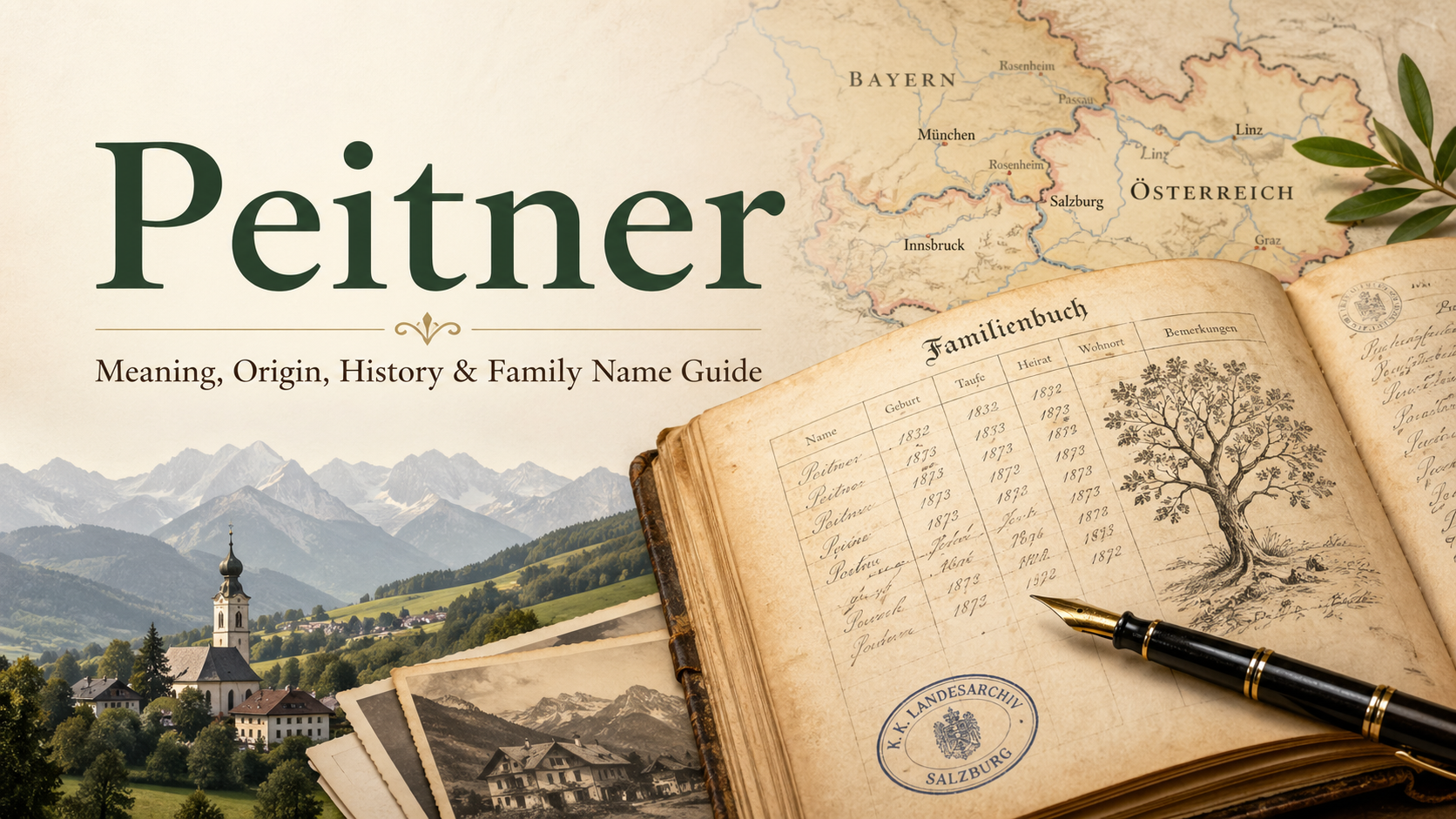
The word Peitner looks unusual at first. Maybe you saw it as a surname, maybe in an old family record, or maybe it appeared online and made you pause for a second. It’s not a common everyday word, so yes, the curiosity makes sense.
In most reliable sources, Peitner is treated as a rare family name. It has roots linked to German-speaking areas, especially Bavaria and Austria. FamilySearch explains Peitner as a German and Jewish Ashkenazic surname, connected either to a person living near a mountain slope or to soldering work in Yiddish tradition.
And that’s where the story gets interesting. A small name can carry land, work, movement, and memory inside it.
What Does Peitner Mean?
Peitner is mainly understood as a surname with Central European roots. It may describe someone who lived near a mountain spur, ridge, or slope. In older naming systems, people often received names based on where they lived, what they did, or which family they belonged to.
FamilySearch gives two main meanings for Peitner:
| Possible Meaning | Origin Link | Simple Explanation |
|---|---|---|
| Mountain slope or spur | German, Bavaria, Austria | A person who lived near a slope, ridge, or mountain side |
| Soldering work | Jewish Ashkenazic / Yiddish | A person connected with soldering or metal joining work |
The first meaning feels very natural for Alpine regions. Mountains, hills, ridges, and valleys shaped daily life there. So a name connected to land was not strange at all.
Why Surnames Like Peitner Started
Long ago, people did not always need fixed surnames. In a small village, “Hans the baker” or “Maria by the hill” was enough. But as towns grew, records became more formal. Churches, tax offices, landowners, and local courts needed better ways to identify people.
So surnames became useful.
Names often came from:
- A person’s job
- A father’s name
- A village or region
- A physical feature
- A nearby natural landmark
- A family’s social or religious background
Peitner fits well into this old naming pattern. It seems to describe either place or work. Simple, practical, and very human.
The German and Alpine Connection
The Peitner surname is linked with German-speaking regions, especially Bavaria and Austria. FamilySearch directly lists the name as German from Bavaria and Austria, with a meaning tied to a mountain slope or spur.
That matters because surnames from mountain areas often came from geography. A family living near a ridge, hillside, or slope could slowly become known by that feature. Over time, the description turned into a family name.
And once a name becomes official in records, it can travel for centuries.
Is Peitner the Same as Peintner?
Peitner and Peintner look very close. They may be connected in some family lines, but they should not be treated as exactly the same without proof.
Old records were often handwritten. A priest, clerk, or immigration officer might spell names differently. One letter could change because of accent, dialect, handwriting, or simple mistake. That’s why surname research often checks spelling variations.
Ancestry lists Peintner as a surname found in U.S. records between 1880 and 1920, with one recorded Peintner family in Indiana in 1880. Forebears also lists Peintner as a rare surname, with higher numbers in Italy, Austria, Germany, and the United States.
So yes, Peintner may be useful to check if you are researching Peitner family history.
Common Variations to Check
If you are looking into old records, don’t search only one spelling. Try close versions too.
Useful surname variations may include:
- Peitner
- Peintner
- Pettner
- Pitner
- Pittner
- Paintner
- Pointner
- Leitner
Some of these may be unrelated in certain cases. But for genealogy research, they are worth checking. Old documents are messy sometimes. Names moved across borders. Spellings shifted. It happens a lot.
Why Peitner Is a Rare Name
Peitner does not appear to be a widely used global surname. That rarity can make research harder, but also more exciting. A rare surname gives you fewer random results, which helps when checking family records.
But there’s a catch.
Because the name is rare, some online articles may repeat weak or unverified claims. It’s better to start with trusted genealogy sites, census records, church books, immigration papers, and local archives.
Good places to search include:
- FamilySearch
- Ancestry
- Forebears
- National archives
- Church registers
- Passenger lists
- Cemetery records
- Old marriage and birth records
And yes, sometimes the best clue is not the surname alone. It’s the place, date, religion, occupation, and names of nearby relatives.
Peitner in Family History Research
If your family name is Peitner, the best research method is slow and careful. Don’t jump straight to medieval history. Start with what you know.
Write down:
- Your parents’ full names
- Grandparents’ names
- Birthplaces
- Marriage dates
- Known migration stories
- Old documents at home
- Family nicknames
- Religious background
- Any spelling changes
Then move backward, one generation at a time.
A name like Peitner may lead you toward Austria, Bavaria, Hungary, Croatia, or nearby regions. FamilySearch shows Peitner connected in its family tree data with places including Hungary, Germany, and Croatia, though those numbers are from its own family-tree records rather than a full world population count.
Cultural Value of a Name Like Peitner
A surname is more than letters. It carries family memory. It may point to a hillside village, a craft, a migration route, or a group of people who kept moving and adapting.
Peitner has that quiet kind of depth. Not famous everywhere. Not loud. But meaningful.
For some families, it may connect to Alpine life. For others, it may connect to Jewish Ashkenazic history and work traditions. And for many people today, it may simply be the name they inherited without knowing the story behind it.
That’s normal. Most people only discover the value of a surname when they begin asking questions.
Quick Facts About Peitner
| Topic | Details |
|---|---|
| Main type | Surname / family name |
| Likely roots | German-speaking Central Europe |
| Linked regions | Bavaria, Austria, nearby Alpine areas |
| Possible meaning | Person near a mountain slope or spur |
| Other possible meaning | Soldering worker in Yiddish tradition |
| Related spelling to check | Peintner |
| Research difficulty | Moderate, because the name is rare |
| Best records to use | Census, church, immigration, birth, marriage, death records |
How to Research the Peitner Name Properly
Here’s a simple step-by-step path:
- Start with living family memory
Ask older relatives about names, towns, and old stories. - Collect documents first
Birth certificates, marriage papers, passports, old letters, and grave records can help a lot. - Search spelling variations
Try Peitner and Peintner first. Then check similar names. - Track locations carefully
One town name can be more useful than ten random surname results. - Compare records
Don’t trust one record alone. Match dates, relatives, places, and occupations. - Watch for migration changes
A name may have changed after moving to another country.
Final Thoughts on Peitner
Peitner is a rare surname with strong links to place, work, and Central European history. The most reliable meaning points to someone connected with a mountain slope or spur, especially in German-speaking regions like Bavaria and Austria. Another possible meaning connects the name with soldering work in Jewish Ashkenazic tradition.
It’s a small name, yes. But small names often carry the best stories.
And maybe that’s the real charm of Peitner. It doesn’t give everything away at once. You have to follow the records, check the old spellings, ask family questions, and piece the story together bit by bit. That’s how family history usually works — slowly, imperfectly, but with meaning.