 By Admin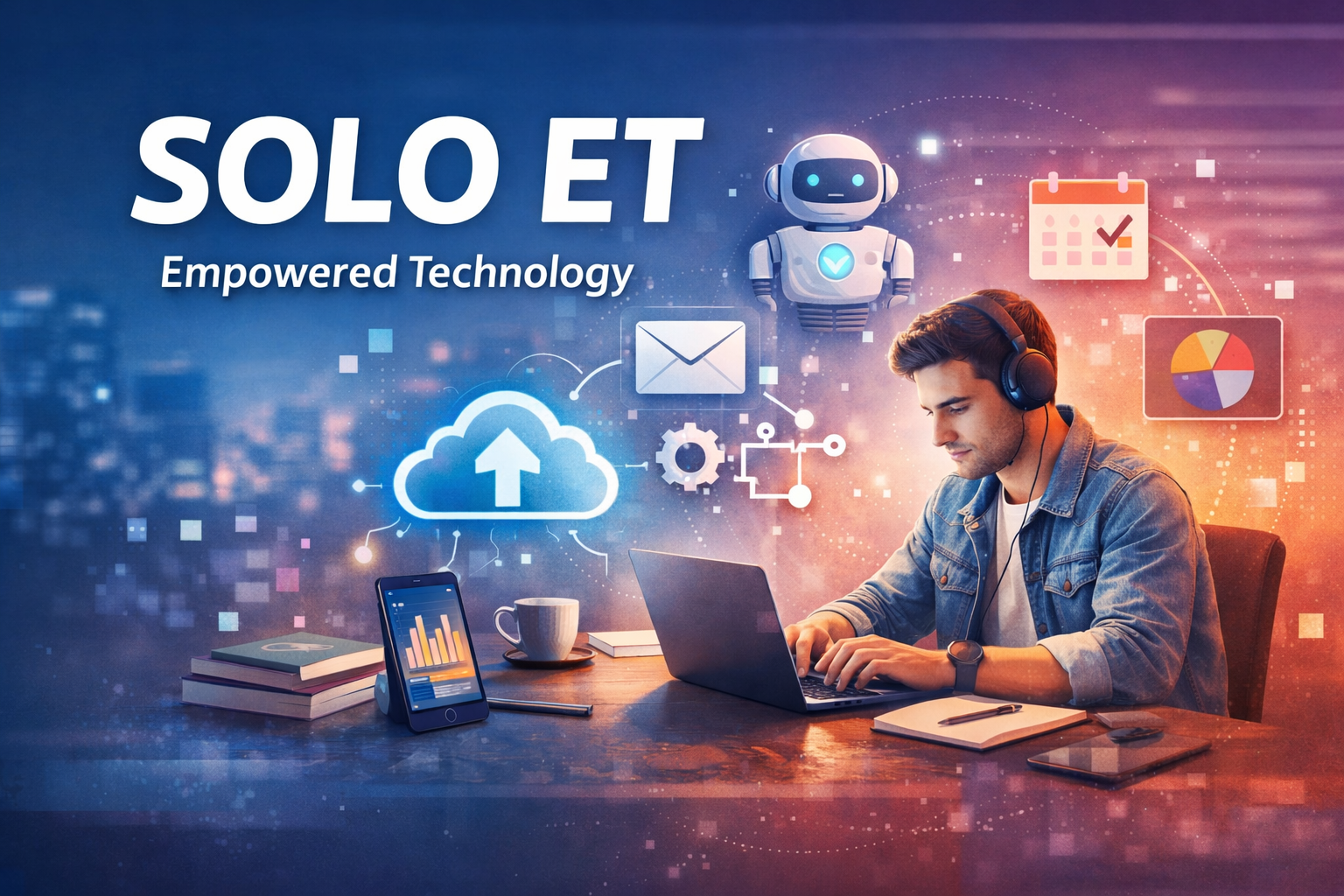
You’ve probably seen strange terms online that suddenly start getting attention. Solo ET is one of those. At first glance, it sounds a bit confusing… maybe even too technical. But once you dig into it, the idea is actually pretty simple.
In most online discussions, Solo ET is commonly used as short for Solo Empowered Technology. In plain words, it describes the way modern technology helps one person do more on their own. That could be work, learning, content creation, planning, or even running a small business without needing a full team behind them.
And that’s why people are starting to notice it.
What Is Solo ET?
Solo ET is all about independence powered by technology. Instead of relying on many people for every small task, one person can use digital tools to manage things faster and more smoothly.
For example, someone working alone today can:
- write content with AI support
- manage meetings with scheduling tools
- store files in the cloud
- automate emails and reminders
- track results with analytics dashboards
A few years ago, this kind of setup felt advanced. Now? It’s becoming normal.
That’s really the core of Solo ET. One person, smarter tools, better output.
Why People Are Interested in Solo ET
There’s a reason the term feels relevant right now. People want flexibility. They want more control over their time. And honestly, many people are tired of complicated systems and unnecessary delays.
Solo ET fits into that shift.
It appeals to:
- freelancers
- remote workers
- students
- digital creators
- online sellers
- startup founders
- consultants
- even people just trying to organize life better
The big attraction is this: technology makes solo work feel less heavy.
Not easy all the time… but lighter.
How Solo ET Works in Real Life
The idea sounds broad, so it helps to break it down into simple parts.
| Solo ET Element | Example | Main Benefit |
|---|---|---|
| AI tools | Writing drafts, brainstorming, summaries | Saves time |
| Automation | Sending reminders, invoices, follow-ups | Reduces repetitive work |
| Cloud storage | Accessing files anywhere | Improves flexibility |
| Analytics | Tracking content, sales, habits, or traffic | Supports better decisions |
| Communication apps | Messages, calls, team coordination | Keeps work moving |
When all these tools come together, a single person can handle a lot more than before.
And that’s the point.
The Biggest Benefit of Solo ET
The biggest benefit is not just speed. It’s personal power.
Solo ET gives people the ability to operate with more confidence and less dependence. You don’t always need a big office, a huge budget, or a support team to start doing meaningful work online. Sometimes you just need the right system.
That system might help you:
- launch a side business
- create content regularly
- study in a more organized way
- manage clients better
- stay productive without feeling lost
- build routines that actually work
For many people, Solo ET is not about becoming some kind of tech expert. It’s about becoming more capable in everyday life.
That difference matters.
But Solo ET Also Has Some Problems
Now the honest part.
Solo ET sounds great, but it isn’t perfect. In fact, one of the biggest problems is that people often use too many tools at once. One app for notes. Another for scheduling. Another for writing. Another for project management. And then everything becomes messy.
Instead of freedom, it starts to feel noisy.
Some common issues with Solo ET are:
- too many subscriptions
- tool overload
- distraction from constant notifications
- weak cybersecurity habits
- depending too much on automation
- loss of personal focus
And yes, sometimes people spend more time setting up “productivity systems” than actually getting work done. That happens a lot.
So Solo ET works best when it stays simple.
Who Can Use Solo ET?
The good thing about Solo ET is that it is not only for tech workers. That’s a common misunderstanding.
It can work for almost anyone who wants to do more independently.
Here are a few examples:
- A student using AI and study apps to learn faster
- A freelancer managing clients, deadlines, and invoices alone
- A small business owner using automation for customer messages
- A content creator editing, scheduling, and publishing without a team
- A job seeker organizing applications, research, and communication
So really, Solo ET is less about job titles and more about how a person uses technology to support themselves.
How to Start with Solo ET
If someone wants to follow the Solo ET approach, they do not need to build a giant system on day one. That usually backfires.
Start small.
A better way is:
- choose one writing or planning tool
- use one cloud storage platform
- automate one repeated task
- track one important result
- remove tools you don’t really need
That’s enough in the beginning.
The goal is not to look advanced. The goal is to work better.
Final Thoughts
Solo ET may sound like a trendy digital phrase, but the idea behind it is very practical. It reflects how modern tools are helping people work, learn, and create more independently than ever before.
And maybe that’s why the term is getting attention.
People want freedom. They want structure without pressure. They want support without depending on ten different people. Solo ET sits right in the middle of that need.
So if you want the simplest definition, here it is:
Solo ET means using technology to become more capable on your own.
That’s it. Simple… but powerful.