 By Admin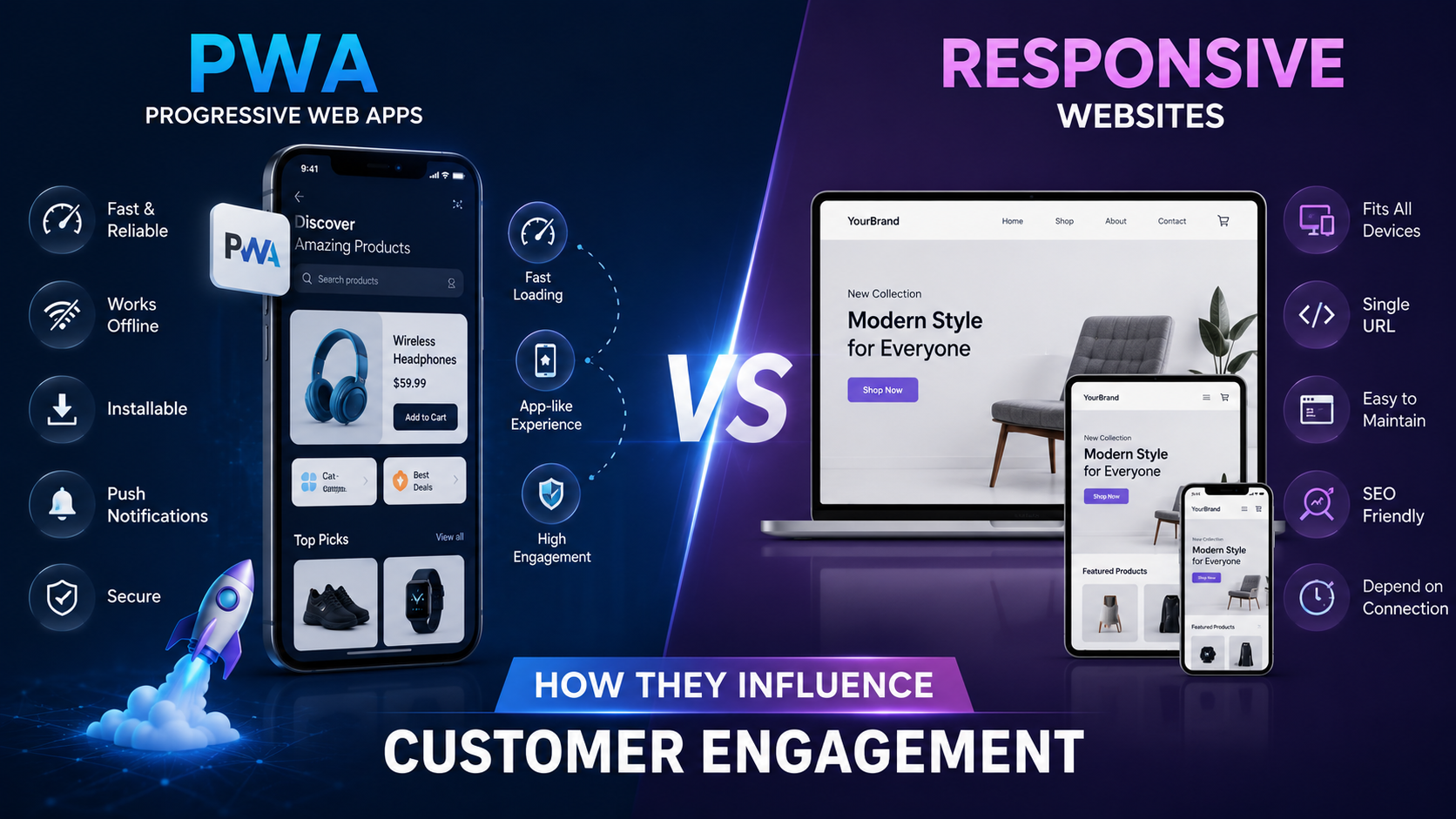
Customer engagement has become one of the strongest indicators of digital success. A fast-loading website may attract visitors, but meaningful engagement depends on how users interact with the platform after they arrive. Businesses today must deliver experiences that are responsive, intuitive, and reliable across different devices while meeting growing customer expectations. This is why PWA vs Responsive Websites continues to be an important consideration when planning digital solutions. Although both approaches improve mobile accessibility, they create different user experiences and support different business goals. Understanding PWA vs Responsive Websites enables organizations to choose a solution that strengthens customer engagement, improves retention, and supports long-term digital growth.
Why Customer Engagement Matters More Than Mobile Compatibility
Mobile-friendly design has become a standard expectation rather than a competitive advantage. Today’s users expect websites to respond instantly, remember their preferences, and provide consistent experiences regardless of device or network quality.
Businesses that deliver smooth digital interactions often benefit from:
- Longer browsing sessions
- Higher customer retention
- Increased conversions
- Better user satisfaction
- Greater brand loyalty
Selecting the right web architecture plays an important role in achieving these outcomes.
Responsive Websites Prioritize Accessibility
Responsive websites automatically adapt their layout according to different screen sizes, allowing users to browse comfortably on desktops, tablets, and smartphones without requiring separate versions of the same website.
Key advantages include:
- Flexible layouts
- Mobile-friendly navigation
- Consistent branding
- Cross-device compatibility
- Easier website maintenance
Responsive design focuses on making information accessible while providing a consistent browsing experience across multiple devices. This makes it an excellent choice for businesses that primarily publish content or provide informational services.
Progressive Web Apps Encourage Ongoing Interaction
One of the biggest differences in PWA vs Responsive Websites is how each approach supports ongoing customer engagement.
Progressive Web Apps combine the accessibility of websites with capabilities commonly found in native applications. Features such as service workers, web app manifests, and browser APIs allow businesses to create richer user experiences.
Common capabilities include:
- Offline functionality
- Push notifications
- Home screen installation
- Background synchronization
- Faster repeat visits
- App-like navigation
Rather than focusing only on accessibility, PWAs are designed to encourage users to return and interact with the platform more frequently.
Faster Experiences Build Stronger Customer Relationships
Performance has a direct influence on customer behavior. Delays of even a few seconds can increase bounce rates and reduce conversions.
Responsive websites improve loading performance through optimized layouts and adaptive media.
Progressive Web Apps extend these improvements by using:
- Resource caching
- Offline storage
- Background updates
- Reduced network requests
- Faster page transitions
These optimizations help create smoother browsing experiences, encouraging users to spend more time exploring the platform and interacting with its content.
Repeat Visitors Drive Long-Term Business Growth
Acquiring new users is only one part of a successful digital strategy. Businesses also need effective ways to encourage visitors to return.
This is another area where PWA vs Responsive Websites reveals meaningful differences.
Responsive websites generally rely on search engines, direct links, or bookmarks to bring visitors back.
Progressive Web Apps strengthen repeat engagement through:
- Home screen shortcuts
- Personalized notifications
- Offline accessibility
- Faster access to previously viewed content
These capabilities reduce friction and make it easier for customers to reconnect with the platform whenever they need it.
Different Business Models Require Different Solutions
Every organization has unique digital objectives, and no single technology fits every project.
Responsive websites are commonly used for:
- Corporate websites
- Business portfolios
- Educational platforms
- Blogs
- Information portals
Progressive Web Apps are particularly effective for:
- Ecommerce platforms
- Customer portals
- Membership websites
- Booking systems
- Subscription-based platforms
Choosing between these approaches depends on user behavior, interaction frequency, and business priorities rather than technology trends alone.
Strong Technical Foundations Support Better Experiences
An engaging digital experience depends on more than frontend performance. Reliable APIs, secure authentication, efficient caching, and consistent data synchronization all contribute to customer satisfaction.
Many organizations strengthen these technical foundations through Backend development services, allowing web applications to manage data efficiently while supporting secure communication and scalable performance.
When frontend and backend technologies work together, businesses can deliver faster, more dependable experiences that encourage continued customer engagement.
Progressive Web Apps and Native Applications
Organizations planning customer-facing platforms often compare Progressive Web Apps with native applications before selecting a development strategy.
PWAs provide many application-like capabilities while remaining accessible through a browser. However, businesses requiring advanced device integration, platform-specific functionality, or hardware access may also evaluate mobile app development services to determine the most appropriate solution.
Comparing both approaches helps organizations balance accessibility, functionality, development effort, and long-term maintenance.
Why Businesses Continue Investing in PWAs
As digital expectations continue evolving, businesses increasingly seek technologies that improve customer engagement without sacrificing accessibility.
Many organizations work with a progressive web app development company to:
- Deliver installable web applications
- Improve customer retention
- Support offline browsing
- Enhance mobile performance
- Create scalable customer experiences
A carefully planned implementation strategy helps businesses maximize the long-term value of Progressive Web App technology while improving digital engagement.
Future Customer Engagement Will Be Experience Driven
Digital platforms continue evolving toward faster, more personalized, and highly interactive experiences. Customers increasingly expect websites to perform like applications while remaining instantly accessible from any device.
To meet these expectations, many organizations partner with a progressive web app development company to build scalable digital platforms that combine performance, accessibility, and engagement. As customer expectations continue changing, businesses that invest in richer digital experiences will be better positioned to strengthen customer relationships and support sustainable growth.
Conclusion
The discussion around PWA vs Responsive Websites extends beyond technical implementation. It focuses on how businesses create digital experiences that encourage customers to stay engaged, return frequently, and complete meaningful interactions. Responsive websites provide broad accessibility and consistent browsing experiences, while Progressive Web Apps introduce capabilities such as offline functionality, push notifications, and app-like interactions that support stronger long-term engagement.
Understanding PWA vs Responsive Websites from the perspective of customer engagement allows organizations to make technology decisions that align with user expectations and business objectives. By selecting the right approach, businesses can improve customer satisfaction, strengthen digital relationships, and create experiences that continue delivering value as their audience grows.